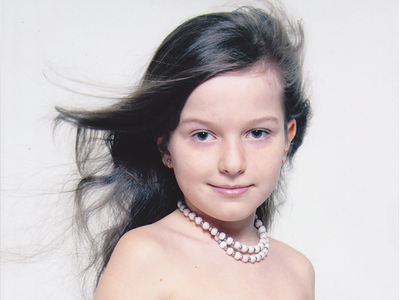
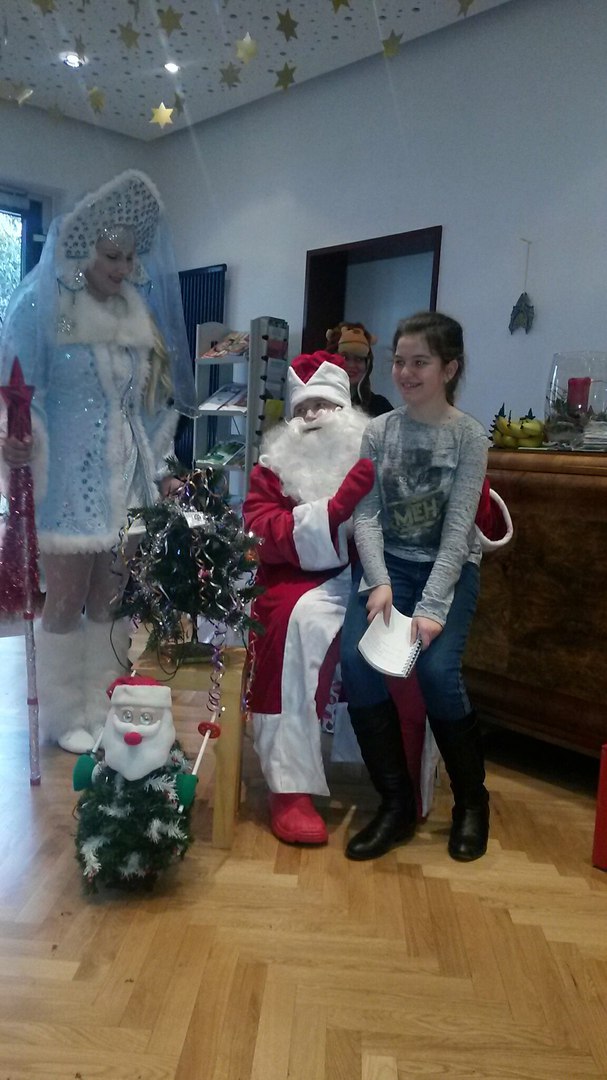
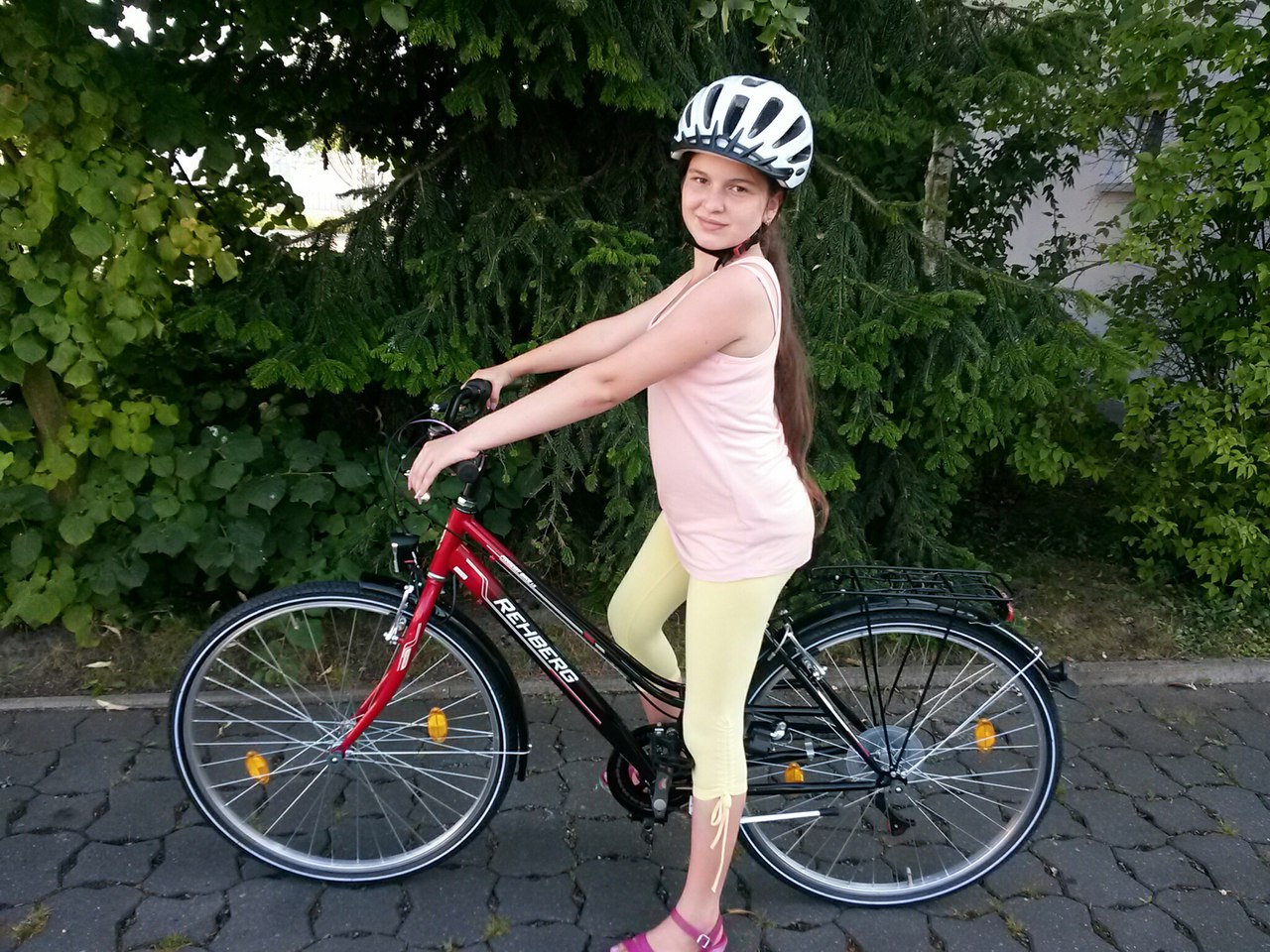
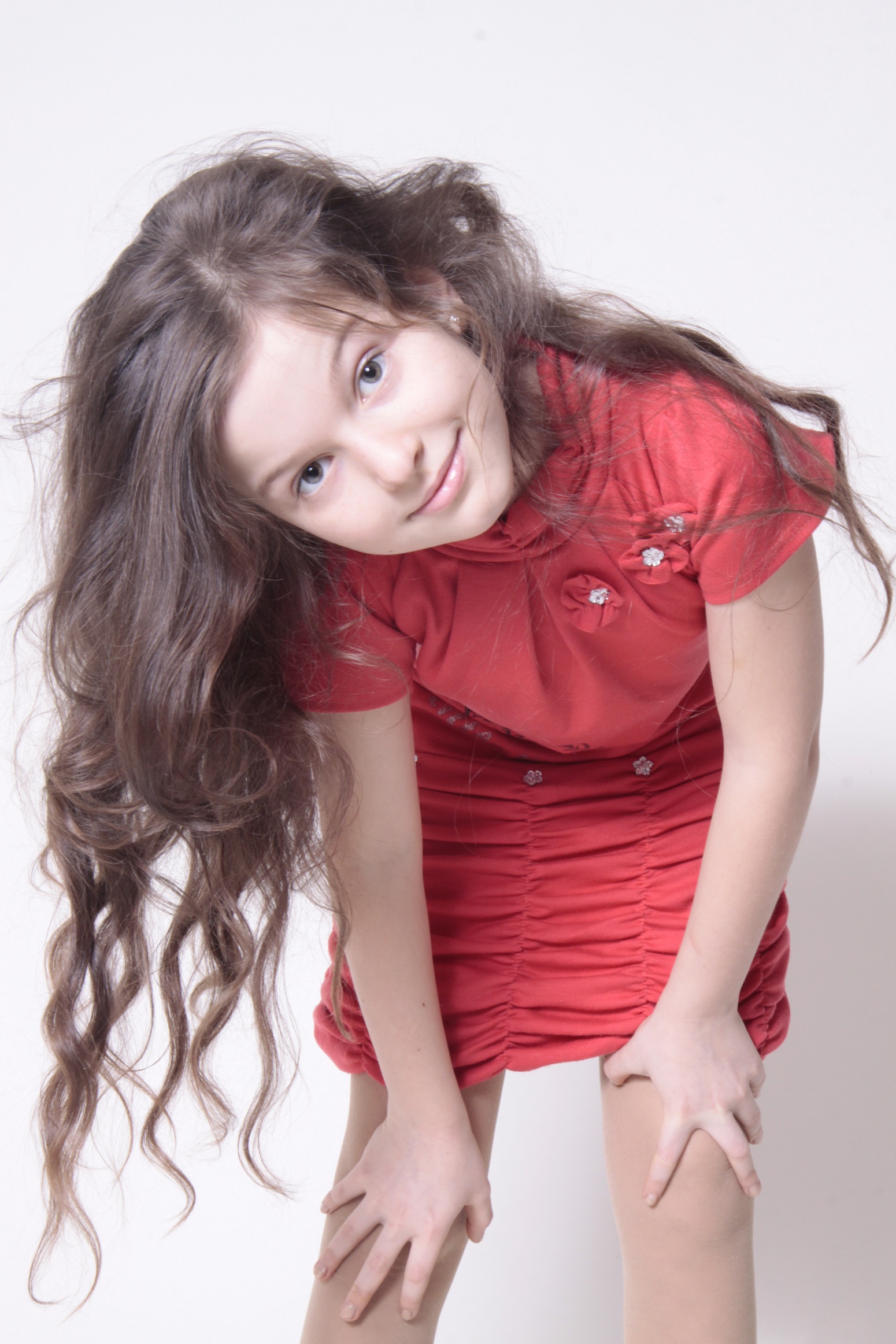
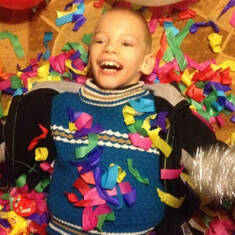
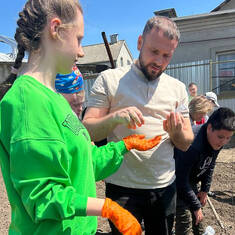
"We are an ordinary family from Ukraine who once made plans, dreams, and lived an ordinary life. No one has the right to know when disaster will strike. Disaster struck ours – our daughter fell ill.
In 2009 our daughter's kidneys began to fail. After numerous examinations and tests, no one could make a definitive diagnosis. Our child was visibly declining, suffering from severe intoxication. From that day on, endless trips to hospitals began. At that time, I was carrying Vika's little brother; I was in the 30 week of pregnancy. Everything my daughter went through—you wouldn't wish it on your worst enemy—a sternal puncture without anesthesia, an MRI, daily IVs…tears…and incredible pain…consultations with doctors from a general practitioner to an oncologist and hematologist. Treatment for all sorts of what we later realized were misdiagnoses. All this went on for a month and a half, while my daughter's fever didn't go down and the intoxication didn't subside. No one could come up with a correct diagnosis. One of those difficult days, while I was at the antenatal clinic getting an ultrasound, I received a terrifying call. «Come urgently, you have 15 minutes, my baby's condition has worsened and she's being taken to Kyiv by intensive care.» It was painful, scary. I remember every minute as my husband and I flew to the hospital to see our daughter. I was afraid we wouldn't make it in time.… The baby was sent to the clinic. «OKHMATDET» I really wanted to stay with my daughter, not even for a second, to be with her, but due to a nervous breakdown, I went into labor. I was rushed to the maternity hospital for observation, and my daughter, screaming and hysterical, was taken to Kyiv, torn from my sarafan. My husband accompanied the ambulance, crying, his heart breaking with pain... Vikulya's condition was critical.… And the doctor said to my face: «They probably won't make it to the clinic. Hang in there...». Upon arrival in Kyiv, we were taken to the «Okhmatdet» clinic, where they prescribed emergency dialysis. But thank God, her husband was there and arranged for additional examinations at Kyiv City Clinical Hospital No.7 in the nephrology department.
A terrifying diagnosis was made: chronic renal failure 5 stage, interstitial nephritis of unspecified genesis, Epstein-Barr virus infection in the replication stage, chronic herpesvirus infection 6 type, retinal angiopathy.
With the sole goal of – getting well against all odds, Vikulya followed all the doctors' orders. She took an incredible number of expensive medications. The child was put on a strict diet. We tried hard to beat the disease. Vika was allowed to go home only after 1,5 months to see her newborn brother. And again, we had to return to the clinic, again tears, again parting.…We fought for six months to keep her creatinine levels down, but they rose.… …This wasn't enough, and the disease slowly and meticulously fought its way out. By that time, her kidneys were already functioning at 9%.
The doctors said they were powerless and that only an URGENT KIDNEY TRANSPLANT or hemodialysis could help. But since... There's no pediatric hemodialysis in our city, and kidney transplants in Ukraine are only performed between related, same-blood-type, and incompatible kidneys, so we had to urgently seek help from clinics abroad. We, as parents, are not suitable donors in Ukraine due to our different blood types.
A clinic in Cologne, Germany, agreed to a mixed-blood-type and incompatible transplant. We traveled here with our whole family because we didn't know who would be the donor—my husband or me. The kidney transplant from my father to Vika was performed 26 September 2014 of this year. A diagnosis was made: «Nephronophthisis» is a genetic disorder that, on average, causes complete kidney failure in a child at 9-12 years of age. This condition is incurable. Only a kidney transplant can save her; otherwise, death...
Before our arrival, the doctors had told us how important the postoperative period was and that medications were an integral part of treatment, without which all efforts would be in vain. Immunosuppression, which our Vika needs to live on for the rest of her life and without which the transplanted kidney could fail, was also a major concern. At this point, we encountered another problem. Due to Ukraine's precarious financial situation, medications were not provided at all for over six months, and then there were significant interruptions.
We are still in Germany. One of the main reasons is that six months after the surgery, Vikulya contracted a cytomegalovirus infection, which caused serious problems with her tests, and her daughter's recovery was delayed. Also, doctors in Ukraine have no experience managing patients after different types of and incompatible transplants. Therefore, they recommend that the rehabilitation period be supervised by the doctors who performed the surgery.
Due to the fact that Vikulya visits the clinic every 2 weeks, undergoes tests, takes expensive medications, and is facing a very extensive examination in Germany, our family is desperately short of funds."
For information on how to help, see here.
On January
24.09.2015
Vika is still in Germany. Her hormone levels (prednisone) are decreasing. It was supposed to be reduced to zero in May, then again in September, but due to unstable test results, this wasn't possible. Sincethe next reduction is now only in November.
Another infection appeared in the urine. Now she's under strict observation every 2 weeks.
06.07.2015
"Finally, Vika's test results started to return to normal, which made us and the doctors very happy. Then, out of the blue, 26 in June, Vika's temperature rose to 39. We were very scared. 27.06 fever 38.4. Weakness, severe headache, and dizziness. We contacted the doctors. So far, they've assumed it's because 26 Vika had a tooth extracted in June, which was growing parallel to the one that hadn't fallen out yet. We're currently monitoring her condition.
From 20 to 29 July, Vika was invited to a camp attended by all kidney patients. There were 11 children of different ages. Vika was very excited about the trip. We agreed with the doctors that they would observe her for 10 days, as the pain in her legs hasn't completely gone away. And now the nightmares have started. We can't sleep at all. But the doctors said it's a consequence of the high dose of immunosuppressant medication.
Germany has been experiencing a heat wave of over 40 degrees for a week now. Vika absolutely cannot be exposed to the scorching sun, so we spend most of our time indoors.
We are very grateful for your support!" The Pelin Family
18.05.2015
Victoria's condition leaves much to be desired. She's constantly weak and nauseous in the mornings. Due to the medication, her gums are severely inflamed. She suffers because eating is very painful. Her body turned out to be very sensitive to strong medications like immunosuppressants. Another problem is that Vika has severe hand tremors. She can't write or draw her homework. But she tries to complete all her homework to finish the school year. This condition is very upsetting for her. Tests and doctor's checkups continue every week. For four years now, Vika has been having vein injections on her arm at least once a week. But she managed before, and she can manage now! This girl has no shortage of resilience and endurance!
Thank you all so much for your support!
06.04.2015
Vika was already being prepared to be discharged from the hospital. They even said she didn't need to come in September and come for a checkup next January. But suddenly her temperature spiked, and the next day she was back in the hospital. Now she needs to have mandatory weekly blood test checks, as her kidney function has deteriorated significantly. 2 Vika still has cytomegalovirus infection in her blood. The doctor said the virus is slowly but surely decreasing, but will reach its lowest levels in a month
2-3 at best. This infection, if it gets worse, can kill not only the kidneys but other organs as well. Vika continues to take the antibiotic "Valcyte" in high doses. Currently, her condition requires constant monitoring. A medical consultation will be held soon.
02.02.2015
A huge thank you to everyone who has helped and is helping Vika! She has all the necessary medications until the end of March. Then she will need our help again.
23.01.2015
"We went to the clinic on Monday for tests. They weren't encouraging; many indicators were significantly below normal: red blood cells, hemoglobin, vitamin D, and many others. Vika isn't feeling well, she's very weak. Back outside, 2 she's been looking for a bench, and at home, too, she's barely played with Tyoma before she immediately goes and lies down. This has me very worried, and now my legs are back. 3 They've been hurting terribly for days on end, and we're spending our nights taking Paracetamol again. We've now been scheduled for a routine post-transplant checkup, which means seeing a lot of different doctors. You have to make an appointment first, and then wait in long, hour-long lines. But that's not the issue; the real issue is that we have to find doctors like an ophthalmologist or a dentist ourselves. Last time, in December, we went to Düsseldorf for an eye exam, because the doctors there are available for months. 2-3 The terms are already laid out. The most important thing is that they find the cause of the leg pain and that everything is fine with the kidney.
We can't thank you enough for your support and assistance! I bow deeply to everyone who helps and supports us. This means a lot to us!"
Vika's Mom
05.12.2014
Letter from Vika's Mom: "Due to the negligence of our clinic's finance department, I can't put it any other way, the Herz Foundation refused to pay us the guaranteed 8 thousand euros, because the clinic didn't write them a letter requesting this amount. Vika (a volunteer) and I have been asking for a letter from the finance department to be sent to Herz for months 3 but there's a very difficult person there, Frau Accosta, who is very difficult to handle. The doctors have already written to her and requested it. Herz won't accept payment requests from me or the volunteers, only from the clinic. I never thought such irresponsible people could work here. But it is what it is. After all, it's not her daughter who needs a vital pill and clinic fees... And now about Vika: we couldn't sleep all night because of the pain in her legs again. We warmed and rubbed them, but she still cried like water all night. Now she's lying under the covers and won't come out. We've resubmitted our documents to the Ministry of Health and all the authorities. We hope that the change of ministers in Ukraine will lead to positive results. Our fellow activists in Odesa aren't giving up and are going all out for Vika, for which we are incredibly grateful. That's some sad news for us. We'll now resolve the issue with the finance department. Thank you so much for your support and assistance!"
03.12.2014
During Vika's treatment, the foundation's account has received 30814 hryvnias. The amount of assistance provided was 36766,07 UAH. Vika now needs to take many different medications to avoid ruining all the treatment steps she's already completed. They must be taken every day, without fail, without deviating from the prescribed schedule. We are continuing to raise funds for Vika's treatment, as her monthly medication needs amount to 6246,65 EUR. Her parents are unable to raise this amount monthly. In hryvnia terms, for six months of medication, we need to raise 705960,15 UAH.
02.12.2014
Vika still suffers from leg pain at night. She had a consultation with a geneticist on Thursday. He said Vika has a genetic disorder called nephronephrosis. This genetic disorder kills the kidneys from birth. You can live with it for up to 20 years at most if you don't get a transplant in time. After the transplant, this disease no longer manifests itself. The doctor was very surprised that this disease wasn't detected in childhood. It's even visible on an ultrasound.
Thank you so much everyone for your help!
19.11.2014
Vika still takes a lot of pills. On prednisone, she's already gained 4,5 kg. She constantly asks for food and isn't satisfied at all. Her mother tries to limit it, but it's difficult. VVika's life now depends and will always depend on the availability of certain medications and qualified medical care. In month, she needs medications worth 6246,65 euro. Immunosuppressants are taken throughout her life to suppress her immune system and prevent kidney rejection. This amount of medication is prescribed for six months, and the dosage will be reduced over time.
Vika's parents and she really need your help! It was scary before the surgery, when Vika could fall into a coma at any moment. But now they are even more scared, because an unseen pill will undo all the treatment steps they've completed so far.
17.10.2014
Today was a very stressful day. Today we were a bit taken aback by the urgent need to have a sum of 1 November. This is the maximum the clinic had anticipated. The Hertz Foundation hasn't transferred the promised 150 thousand euros in the clinic's account by 8 thousand euros yet, and the funds from Megafon, Beeline, and WebMoney haven't been fully withdrawn yet due to the monthly withdrawal limit. And we didn't even collect this amount, because I was counting on everything being cheaper. We went to the finance department and asked for a breakdown of the expenses. Unfortunately, they didn't provide it in full, as they do this quarterly, and until all the doctors submit all the examinations they've performed, they can't provide a full breakdown. Because of this, I'm not allowed to open the collection again. Last night, Vikulya couldn't sleep again from the pain. Her blood pressure and pulse have been very high all day. They're constantly lowering them with medication. Today they prescribed medications for us that we must take for life. The dose is now significantly increased because the immune suppression isn't accumulating as it should. I looked up prices online; it's about 2500 dollars per month if purchased in Ukraine. I understand it would be much more expensive here. I'll find out more details at the pharmacy tomorrow. These medications are supposed to be provided by the state, but unfortunately, due to martial law, they're not currently providing them.
13.10.2014
We haven't slept all night because of the pain—either in our back, our stomach, or our incision. No painkillers are helping. They've already changed them several times. It's really hard to watch this incredible pain at night. Her blood pressure is also skyrocketing because of this, and our heart rate has never been lower than it has been. 130 For the last 2 days, we've been walking from bench to bench outside. She lies down on them and stays there, unable to walk. I can't even occupy her with anything because of this condition. Yesterday, our beloved Dr. Taylan visited us and said that everything is fine with our tests. We just need to wait until the internal hematoma starts to shrink. Our hemoglobin is still fluctuating, but it's not dropping any lower 80 anymore. Our dad has been discharged, but he's very weak and still in pain. This morning, I went to the doctors again for a prescription for painkillers. We pray that this painful and weakened period will pass quickly and that we can share our wonderful news with you.
29.09.2014
I'm writing to you from the intensive care unit. Vika is in very poor condition and is recovering from the anesthesia early. They've already given her a third sedative, but it's not working. She's screaming that she needs to go to the bathroom. The doctor explained this to us as her kidneys starting to work. They brought her 14 pills and an antibiotic this morning, and she vomited them all up. Then they gave her a sedative to help her sleep, but it didn't work. They took Dad in 6 the morning and in 11 He already donated his kidney to his daughter. He lost a lot of blood because there were many arteries, and they had to suture them for a long time and with great difficulty. Vika's surgery started at 1 PM, and thank God, her kidney started working right away. The surgery lasted more than 4 hours. Dad was kept in intensive care until morning because the suture was bleeding, and there was a suspicion they might have given me another anesthesia. I haven't slept for four days now; they tried to send me home at 11 PM, but at 12.30 they called and asked me to come urgently. I've only managed to eat all day. Here we are, sitting on a stool next to my daughter. She was a bit rowdy, and they asked us to be present because they don't understand Russian. Vikulya is very swollen, her face has grown 2 several times larger. But this is because her kidney is large and her waist is small. They gave her a lot of fluids. They said tomorrow it will be even worse, the anesthesia will wear off and there will be pain, but we have to survive. We'll find out our test results in the morning. I've experienced so many tears and pain today that I can't even put it into words. My whole life flashed before my eyes. Thank you for your support! We are so grateful!
11.09.2014
Hello! Thanks to your compassion and kind and compassionate hearts, Vikulya and I are now in Germany, at the University Hospital of Cologne. We've already undergone a full examination. Vikulya's father will be the donor. He has already passed all the necessary examinations, and we have written permission for the surgery. The surgery is scheduled for 26 September. Vikulya has been on dialysis for 2 weeks now. She enjoys dialysis because, after a strict diet, she's only fed pizza and ice cream during dialysis. Starting 16 in September, she'll be receiving immunosuppression, and they said there will be many procedures because the surgery involves multiple groups. Her immune system will be reduced to zero. After the surgery, she'll need observation and a six-month stay here for special monitoring. This is also due to the surgery being incompatible. Vikulya is holding up well and dreams of a normal life, when she can interact with her peers and eat normal food. Thank you all for your help and support. We really need it now!!!
09.02.2014
I am crying out to everyone for help! Vikulia's test results have worsened badly, she has turned yellow. Weakness has appeared. There is a green triangle around her mouth. It has been decided to go to hospital tomorrow, urgently. But going to Kyiv means dialysis only, and staying there 3 months. Moreover, if we agree to dialysis it can only be peritoneal, since there is no paediatric haemodialysis in Odesa. There is no possibility of going to Israel for a transplant from a relative, because only 10% of the sum has been raised. Yesterday we spoke to the clinic in Belarus; at first the answer was a flat refusal, but we begged them to let us come and be examined there.
In Belarus my husband and I are again unsuitable as donors because of blood group incompatibility; if a kidney is to be transplanted there, it can only be from a deceased donor, and the wait for one can be 2-3 years. And all that time she has to be on dialysis. To be put on the waiting list we must have at least 50 thousand dollars in our account. (and at present we have raised only 30 thousand dollars). Those are their compulsory conditions. Since time is working against us, we shall ask to be put on the kidney waiting list, but again it all comes down to money. We very much want to transplant a living kidney from one of us and to manage to raise the money for Israel; we shall pray for that. But the illness is insidious, and it is time that rules now, not us. I ask everyone for help, the situation is critical — the child may fall into a coma at any moment. I bow low to everyone for your help!
21.02.2014
Our Vika has arrived. There's little good news. We've already been diagnosed with end-stage chronic renal failure, and our blood counts are even higher. There's a problem with our eyes; they've determined it's the early stages of cataracts. Urgent treatment is needed. Currently, we're taking about 20 pills a day, plus hemoglobin injections and eye treatments. We haven't been put on the waiting list yet, and we need 50 at least a thousand dollars. We received a bill for the surgery, for 54000$, and that's not all, as the doctors said. Honestly, I'm a little discouraged; I don't know what to do next. Belarus is a cadaveric kidney, and its lifespan is much shorter than a transplant from a living kidney. Funding for the Israeli clinic is going very slowly, and our condition is deteriorating. Many people are pinning us down with questions like: «Why don't you get it done in Belarus? It's much cheaper there.».
Yes, it's cheaper, but sometimes the wait for a cadaveric kidney is up to 3-4 years, and the lifespan of this kidney is 2 times shorter than that of a living related donor, and we don't have that time. Many may criticize us for our actions, but like any mother, I want nothing more than to spare my child's suffering, and I want my children to live and be healthy. Honestly, I can't take it anymore.
07.03.2014
Good afternoon, our dear supporters! Thank God, my blood counts haven't increased in a week, but are stable. We're undergoing eye treatment and taking a lot of medication to support our kidneys and hemoglobin. I called doctors in Israel, but they told us they won't be providing further phone consultations because... The child's condition is very serious, so no one wants to take responsibility from a distance. They're suggesting another examination for further consultations. We definitely can't afford it yet. We've ordered another course of medication; our friends are supposed to deliver it to us in a week. We'll try to survive on their medication for a while longer; the difference compared to ours is certainly significant. Vikulya really misses being with her peers. Thank you all so much for remaining so caring about our plight in these difficult times, when such terrible things are happening in the country.
24.04.2014
Vikulya gave us a real scare today. When I woke up this morning, I heard: «Mom, I feel sick! I'm really dizzy and nauseous.» I immediately went to my room and lay down. I felt like the ground had fallen from under me. I saw her green face, her trembling lips, and the fear, the incredible fear in her eyes. I didn't know what to do, what to do; the same fear and hopelessness set in. She only came around in the evening, started eating and communicating. I push away the bad thoughts, but I have no more strength. I can't sleep anymore; my husband and I take turns going to our room, praying that the worst doesn't happen. There's very little time left, and the fundraising has stalled. If we delay getting on the waiting list again, we'll lose hope. We've been sent a bill from Minsk for 60 thousand dollars. Help us save our daughter, she has so many plans and dreams for the future.